
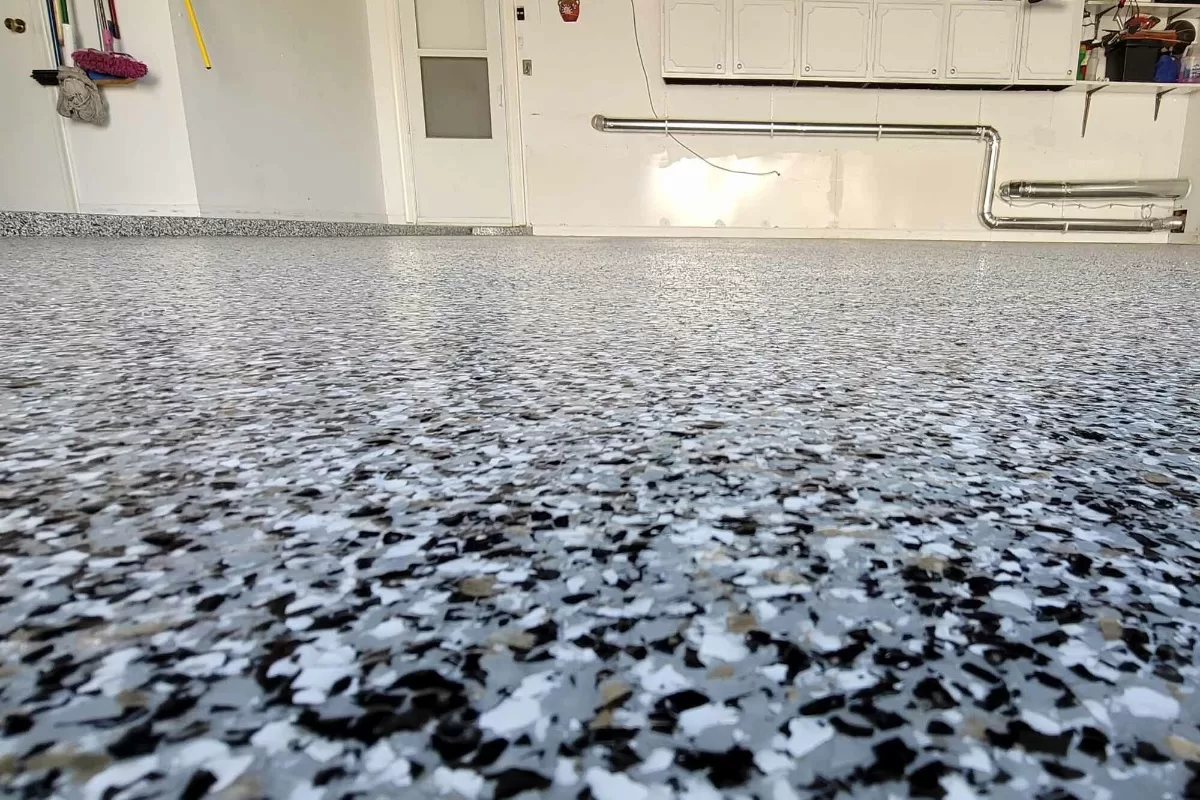
Flake epoxy flooring is a versatile surface solution that combines strength, safety, and beauty. Unlike plain epoxy coatings or painted concrete, this system incorporates decorative vinyl or acrylic flakes into the surface, producing a speckled finish that is both functional and eye-catching. The texture not only enhances appearance but also improves traction, setting it apart from simpler flooring options.
Homeowners and businesses alike choose flake epoxy because it delivers the rare blend of durability, design flexibility, and slip resistance. It elevates spaces such as garages, workshops, kitchens, and showrooms into polished environments that are easy to maintain and built to last.
This guide explores the essentials of flake epoxy floors—covering their composition, benefits, design possibilities, installation steps, cost-value balance, maintenance requirements, and real-world suitability.
What Is Flake Epoxy Flooring
At its core, flake epoxy flooring is a layered system. It begins with an epoxy base coat, followed by the broadcasting of vinyl or acrylic flakes in a variety of colors and sizes. Finally, a clear protective topcoat is applied to seal the surface, locking the flakes in place while adding depth and shine.
Two common approaches are used: full broadcast, where flakes cover the entire surface for a dense and textured look, and partial broadcast, where flakes are scattered more lightly for subtle design effects. Gresham Concrete Coatings provides both styles to match different functional and aesthetic goals.
Performance is paramount. The flakes add micro-texture that reduces slipperiness, while the sealed surface resists stains, chemicals, and wear. Imperfections in the underlying concrete are camouflaged, creating a flawless finish that looks intentional and professional.
Benefits of Flake Epoxy Floors
- Enhanced Durability: These floors are engineered to withstand heavy foot traffic, vehicle loads, and impacts from equipment. Unlike bare concrete, they resist chipping and spalling.
- Safety: The textured surface reduces the likelihood of slips, even in moisture-prone or spill-heavy environments. This makes them ideal for kitchens, garages, and industrial spaces.
- Aesthetic Flexibility: Available in endless color blends and flake sizes, these floors can be tailored to match décor or even company branding. They strike a balance between utility and design.
- Low Maintenance & Easy Cleaning: The seamless surface resists stains from oil, chemicals, and water. A quick sweep or mop is usually all that’s required to keep the floor pristine.
- Value for Money: While the initial cost may be higher than paint or tile, the long lifespan and minimal repair needs provide excellent long-term savings.
Design & Style Options
Flake epoxy flooring is as much about creativity as it is about durability.
- Flake Blends: Choose from countless color combinations, varying flake sizes, and different densities of coverage. This allows for subtle or dramatic effects.
- Finishes: Topcoats can be glossy for a reflective sheen or matte for understated elegance. UV-stable finishes are available for sun-exposed areas.
- Partial vs Full Broadcast: Partial broadcast creates a lighter, more economical look, while full broadcast delivers a bold, terrazzo-like effect.
- Decorative Accents: Borders, safety zones, logos, and patterns can be integrated, making floors not only functional but also branded or personalized.
Installation Process
Proper installation ensures long-term performance:
- Surface Preparation: Existing coatings are removed, cracks are repaired, and the concrete is cleaned thoroughly. Moisture testing prevents future delamination.
- Base Coat Application: The epoxy base coat is applied evenly, creating the foundation for adhesion.
- Broadcasting Flakes: Flakes are spread across the surface—either partially or fully—depending on the design plan. Excess flakes are removed after curing.
- Top Coats: Clear sealants lock the flakes in place and provide durability. UV-protective coatings may be used in outdoor or sunlit areas.
- Curing: Environmental factors such as temperature and humidity are monitored to ensure a proper cure. Floors are typically ready for light use within 24–48 hours.
Cost & Value Analysis
The cost of flake epoxy floors depends on several factors: square footage, density and type of flakes, surface preparation, and whether a partial or full broadcast system is used. Local labor rates and custom finishes also influence pricing.
With proper installation and care, these floors can last 10–20 years, significantly outlasting painted concrete or vinyl tiles. Though upfront costs are higher, the reduced need for replacement or repair makes flake epoxy a cost-effective choice in the long run.
Compared to alternatives like tiles or bare concrete, flake epoxy offers unmatched durability, seamlessness, and style.
Maintenance & Longevity
- Daily Cleaning: Simple sweeping and occasional mopping with non-abrasive cleaners keep the surface spotless.
- Periodic Inspections: Regular checks help identify early signs of dullness, chips, or peeling.
- Resealing: A fresh topcoat every few years refreshes the floor’s appearance and restores protection.
- Environmental Effects: Heavy use, moisture exposure, or prolonged UV light can shorten lifespan, but proper coatings and care mitigate these risks.
Suitability & Real-World Considerations
Flake epoxy floors excel in a wide range of applications—garages, basements, retail spaces, commercial kitchens, showrooms, and industrial facilities. Their combination of resilience and design makes them adaptable to both residential and commercial use.
However, they are not recommended for severely damaged concrete without prior repair, or for outdoor installations unless UV-stable coatings are used. Climate, moisture levels, and substrate condition must always be assessed before installation.
Comparisons & Alternatives
- Flake Epoxy vs Solid Color Epoxy: Flake systems disguise imperfections and provide better traction, while solid color epoxy offers a cleaner, uniform look.
- Flake Epoxy vs Tiles or Stone: Epoxy is seamless, more affordable, and easier to maintain, while tiles or stone may shift or crack over time.
- Alternatives: Polyaspartic coatings cure faster, urethane provides chemical resistance, and decorative overlays offer different textures—but flake epoxy balances cost, function, and aesthetics.
Choosing the Right Contractor
Quality installation is the cornerstone of long-lasting results. Look for contractors with proven portfolios of flake epoxy projects. Request references and view completed jobs in similar environments.
Ask detailed questions about flake density, UV stability of topcoats, warranties, and surface preparation methods. Verify that the installer offers both partial and full broadcast systems, giving you flexibility in design and budget. Local experience also matters, as climate and substrate conditions vary regionally.
Flake epoxy flooring combines rugged strength with artistic flexibility. It stands up to daily wear, adds traction for safety, and provides a stunning finish that can be tailored to any space. The system’s longevity and low maintenance requirements make it a valuable investment for both homeowners and businesses.
By selecting the right design, ensuring proper installation, and maintaining it with care, a flake epoxy floor will remain a durable, stylish, and functional surface for years to come.
