
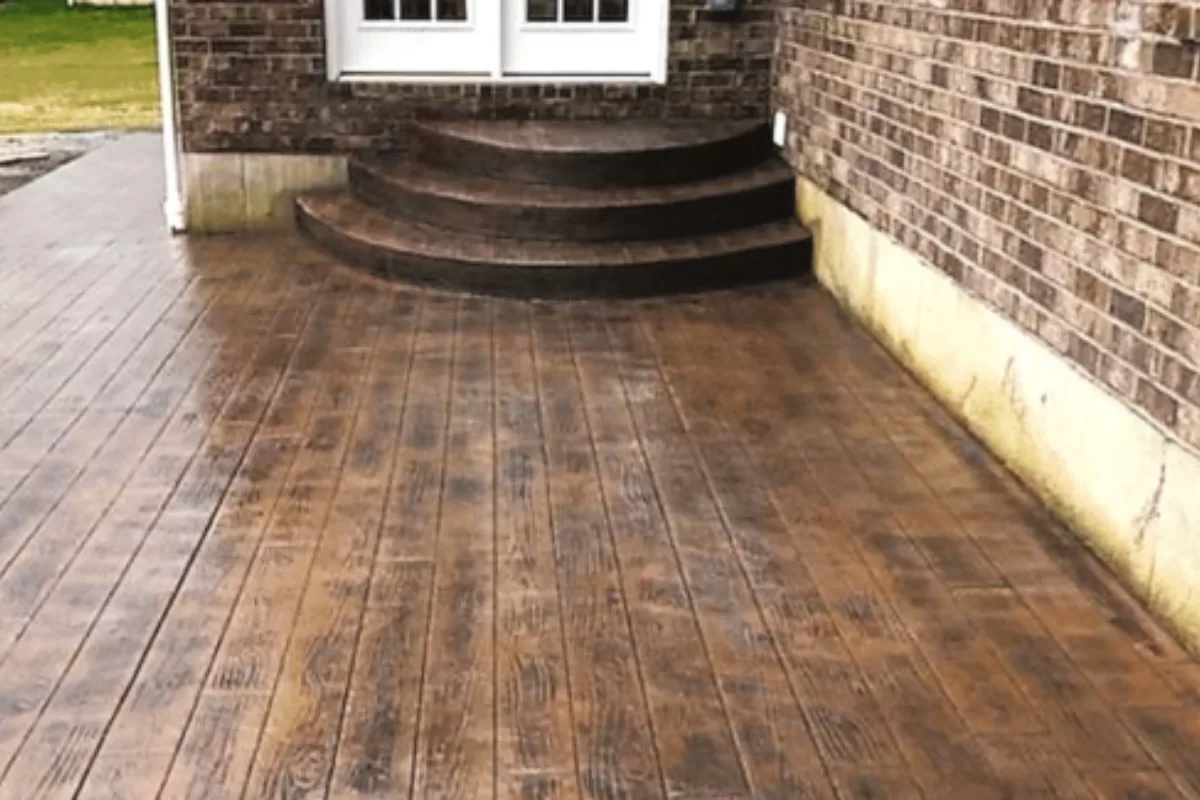
Why homeowners in Centerville love the rustic wood aesthetic
Centerville homeowners appreciate outdoor spaces that feel warm, textured, and authentically connected to the natural environment. Rustic wood styling captures that essence immediately. It evokes porch memories, rural craftsmanship, and the soothing personality of aged timber. This charm blends seamlessly with the area’s suburban landscapes, creating patios that look handcrafted and welcoming the moment they are installed. The combination of rugged texture and gentle tones makes these patios feel like extensions of the home rather than add-ons.
Advantages of stamped concrete over natural wood
Natural wood offers undeniable beauty, but it brings high maintenance, vulnerability to moisture, and ongoing repair costs. Stamped concrete solves these issues while preserving the rich visual character of timber. It doesn’t warp. It doesn’t rot. It doesn’t attract termites. It withstands Centerville’s seasonal changes far better than actual lumber. With the right sealing and occasional cleaning, a stamped concrete patio keeps its appearance for years without sanding, staining, or replacing planks. The long-term stability and cost-efficiency make it a superior alternative for homeowners seeking durability with rustic charisma.
Understanding Rustic Wood Stamped Concrete
How the technique mimics authentic timber
The wood-stamped concrete process involves specialized mats that imprint grain lines, knots, micro-fractures, and texture variations into fresh concrete. These impressions look incredibly similar to natural boards—sometimes indistinguishably so. Installers then layer concrete stains, creating depth, tonal variation, and the illusion of matured or sun-weathered wood. When sunlight hits the surface, subtle grooves catch the light, enhancing realism and giving the patio an artisanal feel.
Popular wood grain patterns and textures
Centerville homeowners typically gravitate toward barnwood textures, wide-plank farmhouse patterns, reclaimed timber impressions, and driftwood-style grains. Each pattern introduces its own distinct character. For example, reclaimed grains offer bold, rugged lines, while smooth cedar-style impressions feel refined and understated. This diversity allows homeowners to match their patio style with the architecture of their home, from craftsman to contemporary.
Design Concepts for Centerville Homes
Farmhouse-inspired patio layouts
Farmhouse-style patios emphasize warmth, simplicity, and a lived-in feel. Wide horizontal planks paired with honey-brown or grayish-tan hues bring that timeless countryside aesthetic to life. These layouts work especially well with rocking chairs, planters, and decorative lanterns.
Modern rustic combinations
Modern rustic design blends clean edges with rugged textures. A wood-stamped patio becomes the perfect anchor for minimalist outdoor furniture, sleek pergolas, and monochromatic décor. Darker stains like espresso or charcoal add modernity, while the wood pattern keeps the space grounded.
Craftsman-style wood plank impressions
Craftsman-inspired patios often showcase narrow plank patterns that highlight precision and detail. Subtle chestnut, amber, or maple tones complete this look. The result is a patio that feels intentional, balanced, and handcrafted—perfect for homes with architectural trim and earthy color palettes.
Color Schemes and Finishing Techniques
Earthy color palettes that complement Centerville landscapes
Stamped concrete patios mimic natural wood most convincingly when paired with earthy hues. Chestnut browns, dusty tans, walnut shades, soft grays, and charcoal all blend effortlessly with Centerville’s tree-lined neighborhoods. These palettes enhance curb appeal and bring cohesive ambiance to backyard environments.
Multi-tone stains for dimensional realism
Using more than one stain color adds immense depth. Installers may apply a warm base color, such as amber, followed by charcoal accents brushed into the grains. This creates realistic dimension—the same way real wood displays both dark and light streaks through the fibers. The variations feel organic and timeless.
Matte, satin, and gloss sealant options
Sealant plays a major role in the final look. Matte sealants create an aged, natural appearance ideal for rustic themes. Satin finishes add light reflectivity, giving the surface a subtle glow. Gloss sealants offer a polished, luxurious sheen—popular for patios designed for entertaining or modern rustic concepts.
Layout Ideas for Outdoor Living Spaces
Cozy firepit zones
A rustic wood stamped concrete patio pairs beautifully with round or square firepit areas. The grain texture enhances the warmth of the flames, creating a cozy retreat for evenings. Surrounding the pit with built-in seating or Adirondack chairs completes the lodge-like effect.
Dining and entertainment configurations
Stamped concrete’s strength allows for heavy grills, dining tables, and sectionals without surface damage. Long linear plank layouts guide guests visually toward the dining area, making the entire space feel intuitive and well-organized.
Seamless transitions between indoor and outdoor areas
Using similar tones or grain patterns inside the home and on the patio creates a flowing connection between indoors and outdoors. This is especially effective with sliding doors or open-concept living areas. The patio feels like a continuation of the home rather than a separate zone.
Integrating Landscaping with Stamped Concrete
Greenery accents that highlight wood-like textures
Lush greenery brings out the rugged texture of wood-stamped concrete. Plants like boxwoods, ornamental grasses, hydrangeas, and ferns complement the warm tones of the patio. The contrast between soft vegetation and textured concrete produces a balanced, calming environment.
Stone borders and decorative edging
Patios framed with river rock, natural stone, brick, or gravel edging gain additional architectural definition. These elements help tie the patio into the surrounding landscape while adding color and structural contrast.
Durability and Weather Adaptability in Centerville
Freeze-thaw resilience
Centerville’s seasonal cycles introduce freeze-thaw conditions that can damage poorly installed patios. Fortunately, stamped concrete—when properly mixed, cured, and sealed—resists cracking and surface deterioration. Installers often use air-entrained concrete mixtures that allow the slab to expand and contract safely with temperature shifts.
Low-maintenance upkeep for long-term performance
Maintaining a rustic wood stamped patio is remarkably simple. Periodic sweeping, occasional power washing, and resealing every few years keep the surface resilient and vibrant. Unlike wood, it never requires staining, sanding, or replacing rotted boards.
Enhancing the Patio with Add-Ons
Built-in seating features
Concrete seating walls, curved benches, and planter-seating hybrids enhance functionality while complementing the rustic design. Their solid form blends seamlessly with stamped flooring, creating a unified aesthetic.
Outdoor lighting to showcase the wood grain
Strategic lighting transforms the patio at night. Warm LED path lights, embedded step LEDs, and pergola string lights illuminate the grain details carved into the concrete. Shadows deepen the texture, giving the patio an atmospheric glow.
Pergolas and shade structures
Pergolas add height, dimension, and architectural beauty. Whether built from cedar, metal, or composite materials, they pair effortlessly with wood-stamped concrete. Shade structures also protect the patio surface from UV exposure, helping maintain color vibrancy.
Cost Considerations and Long-Term Value
Installation pricing factors
Costs vary depending on square footage, Site prep complexity, coloring techniques, and the number of stain layers. Multi-tone finishes and intricate grain patterns require additional labor. Despite this, stamped concrete remains more cost-effective than installing real hardwood outdoors.
Why stamped concrete outperforms natural wood financially
Natural wood demands regular staining, sealing, repairs, and eventual board replacements—costs that accumulate quickly. Stamped concrete avoids these burdens. Its longevity and durability significantly reduce long-term expenses, offering Centerville homeowners exceptional value over decades.
Common Mistakes to Avoid
Overly dark staining
Too-dark stains can make a patio feel heavy or visually compressed, especially in shaded yards. Lighter or mid-tone hues provide better balance and more authentic “rustic wood” charm.
Ignoring slope and drainage
Proper grading ensures rainwater flows away from the house rather than pooling on the patio. Overlooking drainage leads to surface wear and potential foundation issues. A slight slope is essential for longevity.
Skipping protective sealing
Neglecting sealant applications leads to fading, moisture penetration, and premature wear. Sealants are the key to maintaining vibrant colors and crisp textures.
Choosing a Professional Installer in Centerville
What to ask before hiring
Ask potential installers about stamping techniques, color layering practices, concrete mixes, and prior project experience. Request project photos showcasing wood textures specifically. Skilled craftsmanship directly determines the realism and longevity of your patio.
Importance of proven craftsmanship
Stamped concrete is an art form. Achieving lifelike wood grain requires precision and timing. Experienced contractors understand curing windows, pressure application, and stain blending. Their expertise ensures the finished patio looks authentic, cohesive, and built to endure Centerville’s climate.
Why rustic wood stamped concrete remains a timeless choice
Its durability, aesthetic versatility, and maintenance ease make rustic wood stamped concrete a standout choice for Centerville homeowners. The surface captures the soul of natural timber without any of its weaknesses, offering beauty that lasts through the seasons.
Whether you’re envisioning a cozy fireside nook, a stylish entertainment patio, or a peaceful outdoor retreat, a rustic wood stamped concrete surface brings character, longevity, and charm to your Centerville home—turning everyday outdoor living into something truly exceptional.
