
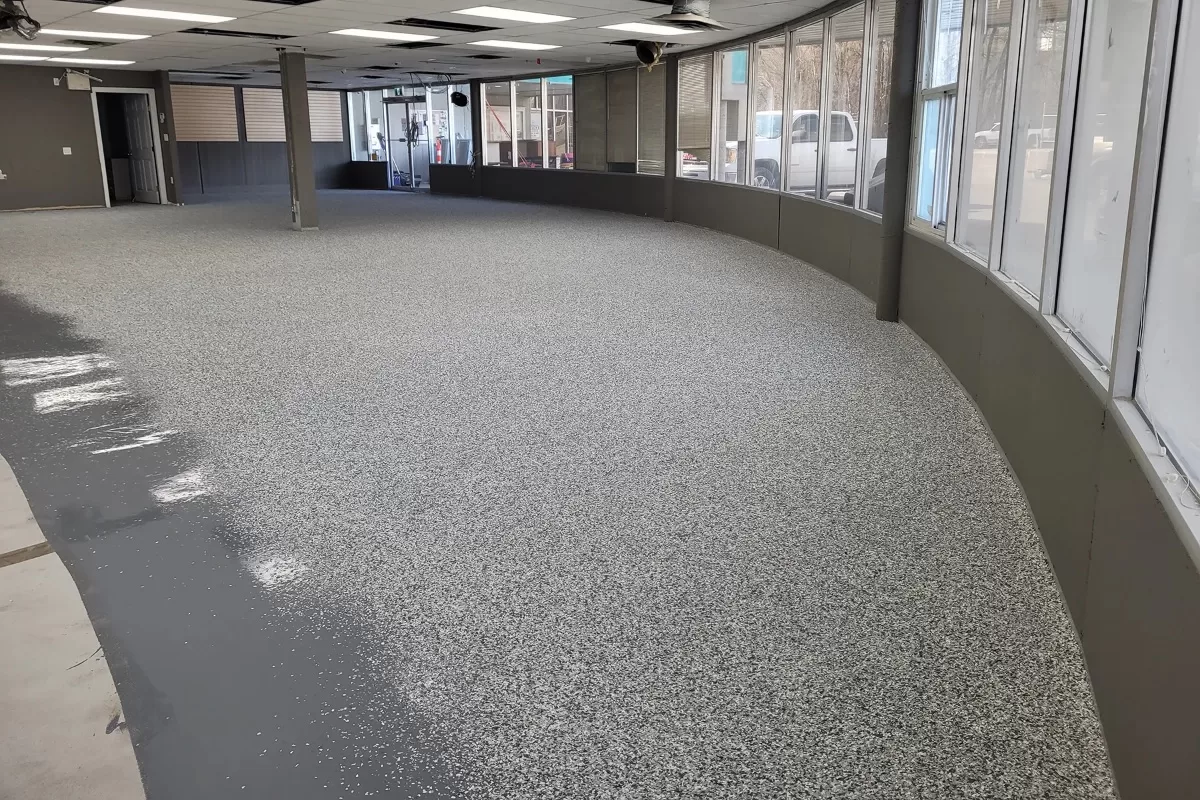
Commercial epoxy flooring is a specialized surface treatment designed to transform plain concrete into a resilient, polished, and functional foundation for demanding environments. It combines resin and hardener to form a rigid plastic-like material that bonds tightly to the substrate, creating a seamless surface that is both attractive and incredibly strong. Unlike residential epoxy, which typically prioritizes aesthetics and light durability, commercial-grade systems are engineered to withstand relentless wear from heavy traffic, machinery, and harsh chemicals.
The demands in commercial settings are uncompromising. Floors must endure forklifts and constant footfall, remain safe under slippery conditions, and present a professional image to employees and clients alike. Durability, safety, and easy maintenance are non-negotiables. Aesthetic versatility also plays a role, as businesses increasingly use flooring as part of their branding strategy.
This article explores the key aspects of commercial epoxy flooring—its types, benefits, installation process, costs, maintenance, and long-term value—providing a comprehensive resource for decision-makers.
What Is Commercial Epoxy Flooring
Epoxy flooring consists of two main components: a resin and a hardener. When combined, they chemically react to form a dense, rigid surface that is resistant to abrasion, impact, and chemicals. Commercial epoxy systems are often thicker than residential versions, incorporating additives such as non-slip agents, UV stabilizers, or chemical-resistant properties to meet specific industry needs.
These floors are widely used in warehouses, retail stores, restaurants, healthcare facilities, and industrial plants. Each environment requires flooring that not only withstands heavy traffic but also complies with hygiene standards and safety protocols. Gresham Concrete Coatings highlights the adaptability of epoxy flooring to meet these varied demands.
Performance metrics include load-bearing capacity, resistance to corrosive chemicals or oil spills, slip resistance under wet conditions, and ease of cleaning. Together, these qualities make epoxy a trusted choice across industries.
Benefits of Commercial Epoxy Flooring
Durability is one of epoxy’s strongest assets. It endures constant foot traffic, machinery loads, and the punishing weight of forklifts without cracking or crumbling.
Hygiene and maintenance are simplified by its seamless design. With no grout lines or joints, dust, bacteria, and spills cannot hide. Cleaning is quick, requiring minimal downtime for businesses.
Safety features are embedded through textured finishes, non-slip additives, and resistance to chemical spills. This helps reduce accidents in high-risk environments such as kitchens, factories, or laboratories.
Aesthetic and branding possibilities further elevate epoxy’s appeal. Flooring can be customized with corporate colors, embedded logos, or decorative finishes, turning functional surfaces into visual assets that reinforce brand identity.
Types & Styles of Commercial Epoxy Systems
- Standard Epoxy Coatings: Ideal for general use, these systems provide a protective layer with excellent adhesion and durability.
- High-Build / Mortar Epoxy Systems: Much thicker, these withstand extreme loads and are used in industrial plants or manufacturing facilities.
- Flake Epoxy: Decorative chips are added to the coating, giving a textured, terrazzo-like appearance while improving slip resistance.
- Specialty Coatings: These include chemical-resistant systems for laboratories, UV-stable coatings for areas exposed to sunlight, and anti-static (ESD) epoxy for electronics manufacturing.
- Finish Options: Gloss, semi-gloss, or matte finishes are available, along with topcoats that enhance protection and ensure long-lasting shine.
Installation Process
Proper installation is the key to performance and longevity.
- Surface Preparation: The concrete is ground or shot blasted to remove contaminants. Cracks and imperfections are repaired, and moisture mitigation systems may be installed.
- Priming/Base Coat: A primer is applied to strengthen adhesion between the substrate and epoxy.
- Layering and Decoration: Epoxy layers are built up, with decorative flakes, pigments, or logos added if desired.
- Final Topcoats: Protective seals are applied to enhance gloss, retain color, and protect against wear.
- Curing: Environmental conditions such as temperature and humidity influence curing time. Businesses must plan for a downtime window, though some systems cure quickly enough to minimize disruption.
Cost, Value & Return on Investment
Costs vary depending on square footage, surface preparation, type of epoxy system, and added decorative features. Specialty systems that resist chemicals or include branding elements are more expensive but often essential for certain industries.
The lifespan of commercial epoxy typically spans 10–20 years, with recoating schedules depending on traffic and maintenance. This longevity offsets initial costs by reducing the need for frequent replacements.
The value gained extends beyond durability. Businesses save on cleaning and maintenance, improve workplace safety, and present a polished environment that enhances customer perception. In industries where brand image matters, the floor itself becomes part of the customer experience.
Maintenance & Longevity
Routine cleaning with sweeping and mopping preserves appearance and hygiene. Harsh chemicals should be avoided to protect the finish.
Periodic inspections of the surface, joints, and topcoat ensure early detection of wear. When dullness or minor damage occurs, recoating or localized repairs restore performance without replacing the entire system.
Moisture issues beneath epoxy can lead to delamination if not managed. Vapor barriers and proper preparation safeguard against this risk, ensuring the system’s longevity.
Suitability & Local / Environmental Considerations
Epoxy flooring must be tailored to local conditions. In humid climates, moisture management is crucial. In colder regions, flexibility and resistance to freeze-thaw cycles are vital.
The type of traffic—whether forklifts in a warehouse, food service carts in a restaurant, or hospital gurneys in healthcare facilities—also determines the system required. Exposure to oils, chemicals, or other aggressive substances must be factored in when choosing additives or topcoats.
The substrate’s condition matters as well. Older concrete with cracks or prior coatings may require more intensive preparation before epoxy can be applied.
Comparisons & Alternatives
- Polished Concrete: Offers a sleek, reflective finish but lacks the chemical and slip resistance of epoxy.
- Modular Tile or Urethane Systems: Provide flexibility and easier replacement but are less seamless and more prone to shifting.
- Vinyl/Resinous Flooring: Affordable and versatile but not as durable under extreme loads as epoxy.
Choosing the Right Contractor
The right contractor ensures both function and aesthetics. Look for proven experience in commercial epoxy, industry certifications, and warranties that back the work.
Review portfolios of past projects, focusing on similar commercial applications. Key questions include adhesion testing methods, moisture mitigation strategies, slip resistance ratings, and compliance with safety regulations.
Scheduling is also critical—contractors should minimize business downtime while maintaining quality standards.
Commercial epoxy flooring is more than a surface—it is an investment in safety, durability, and brand image. Its ability to withstand relentless traffic, resist chemicals, and adapt to aesthetic goals makes it a premier choice for businesses across industries.
Balancing performance with style ensures the best outcome. With expert installation and consistent maintenance, epoxy flooring becomes a long-term asset that supports daily operations while elevating the environment.
Now is the time to explore design options, consult with professionals, and plan the installation of a flooring system that embodies strength, safety, and sophistication.
